Alchemy of Virtues
in partnership with Instituto Virtudes
Alchemy of Virtues in partnership with Instituto Virtudes
ALCHEMY OF VIRTUES · AN INTERNATIONAL PERSPECTIVE

Understand the pattern.
Develop the capacity.

A meeting place for Virtology, human development and the ideas that shape our lives.

Explore Eduardo Casarotto’s framework through its central concepts, its books and essays that bring the questions into everyday experience.

WHAT IS VIRTOLOGY?

A theory of how we function.
A practice of how we change.

Virtology is Eduardo Casarotto’s theoretical and practical framework for human needs, personality and the development of virtues.

Its starting question is concrete: why can we understand a recurring pattern and still repeat it under pressure? The author’s answer brings together what drives us, how we learned to respond and which capacities we can develop.

The proposal reaches from the individual to the institution, connecting personal development with the environments in which people learn, work and live.

AN INTELLECTUAL FRAMEWORK TO EXAMINE

18 theories.
One demanding comparison.

How does Virtology stand in relation to the major theories of personality?

In Foundations of Virtology, Casarotto examines his framework alongside the 18 theories discussed in Theories of Personality by Feist, Roberts and Feist. He brings five traditions into his proposed synthesis: psychodynamics, human needs, dispositional structure, biological foundations and social learning.

PSYCHODYNAMIC

Freud · Adler · Jung · Klein
Horney · Erikson · Fromm

HUMANISTIC & EXISTENTIAL

Maslow · Rogers · May

DISPOSITIONAL & BIOLOGICAL

Allport · McCrae & Costa
Eysenck · Buss

LEARNING & COGNITION

Skinner · Bandura
Rotter & Mischel · Kelly

This is Casarotto’s comparison of theoretical architectures. It does not establish clinical superiority over the other approaches.

Explore the comparison in English →
SNO & SNE · THE AUTHOR’S TWO-ROOT THESIS

Many defenses.
Two proposed roots.

Casarotto proposes that pride and selfishness are the two roots of all neuroses. His model asks which underlying demand a defensive response is protecting.

SNO

Pride.
The need to matter.

Neurofunctional System of Pride

In the author’s account, importance promises acceptance and safety. A threat to recognition or position can organize comparison, control, withdrawal or retaliation.

The proposed shift: humility develops a sense of worth less dependent on position and approval.

SNE

Selfishness.
The priority of the self.

Neurofunctional System of Selfishness

In the model, a rigid priority given to personal needs can reduce the weight of others’ needs, sustaining indifference, inflexibility or instrumental relationships.

The proposed shift: selflessness develops a response that includes the other person.

“All neuroses” states the scope of the author’s theory. It is not an established explanation of all mental illness or a judgment of moral worth. The proposed systems and their mechanisms require independent empirical testing.

Read the two-root argument →
THE CAPACITY TO RESPOND DIFFERENTLY

Seven
Evolution Bands.

Development as a changing mode of functioning.

The seven Evolution Bands describe a proposed continuum of reactivity, awareness and consideration for others. In Casarotto’s account, the question is which responses a person can actually sustain when pressure rises.

  1. 01Primitive
  2. 02Sensation
  3. 03Pre-development
  4. 04Partial awareness
  5. 05Feeling
  6. 06Pre-transcendence
  7. 07Full love and charity

The bands are continuous and reversible states in the author’s model. They are not fixed identities, measures of intelligence or rankings of human worth.

Explore the Evolution Bands →
THE FORCES THAT MOVE US

Five groups.
51 human needs.

A need is not the same as the desire we learn to pursue.

Casarotto distinguishes a human need from the cultural form through which we try to satisfy it. A need for connection, for example, can become attached to recognition, consumption or a particular image of success.

His framework organizes 51 needs into five groups. They remain present across life, with changing intensity and expression. Open each group to explore the full map.

01Primitive NeedsThe demands of survival, safety and significance.8NEEDS
  • Survival
  • Safety
  • Orgasm
  • Trust and credibility
  • Importance
  • Protection of the group
  • Competition
  • Resolving the sense of lack
02Sensation and BondingThe felt experience of life and connection with others.21NEEDS
  • Control
  • A change of environment
  • Comfort
  • Physical contact
  • Speaking and expressing feelings
  • Feeling loved
  • Enjoyment
  • Cleanliness and hygiene
  • Experiencing emotions
  • Possessing objects
  • A space of one’s own
  • Aesthetics
  • Music
  • Physical movement
  • Creativity
  • Privacy
  • Deep and intimate bonds
  • Family and friendship bonds
  • Relationships with colleagues and acquaintances
  • Relationships with strangers
  • Companionship and co-presence
03DevelopmentLearning, individuality and the growth of capacity.11NEEDS
  • Knowledge and understanding
  • Individuality
  • Achievement, accomplishment and legacy
  • Exploration and inquiry
  • Novelty
  • Resolving internal conflicts
  • Self-development
  • Introspection
  • Living through every stage of life
  • Cognitive engagement
  • Restoration and regeneration
04ReconnectionPurpose, contribution and a relationship with the wider world.8NEEDS
  • Coming to terms with death
  • Self-actualization
  • Connection with nature and animals
  • Charity
  • The Self
  • Purpose
  • Teaching and educating
  • Moral and virtuous evolution
05TranscendenceMoving beyond a life organized around the separate self.3NEEDS
  • Self-transcendence
  • Unity with the whole
  • Fullness and completeness

The classification and English renderings above follow Foundations of Virtology. This is the author’s conceptual framework, not a diagnostic questionnaire.

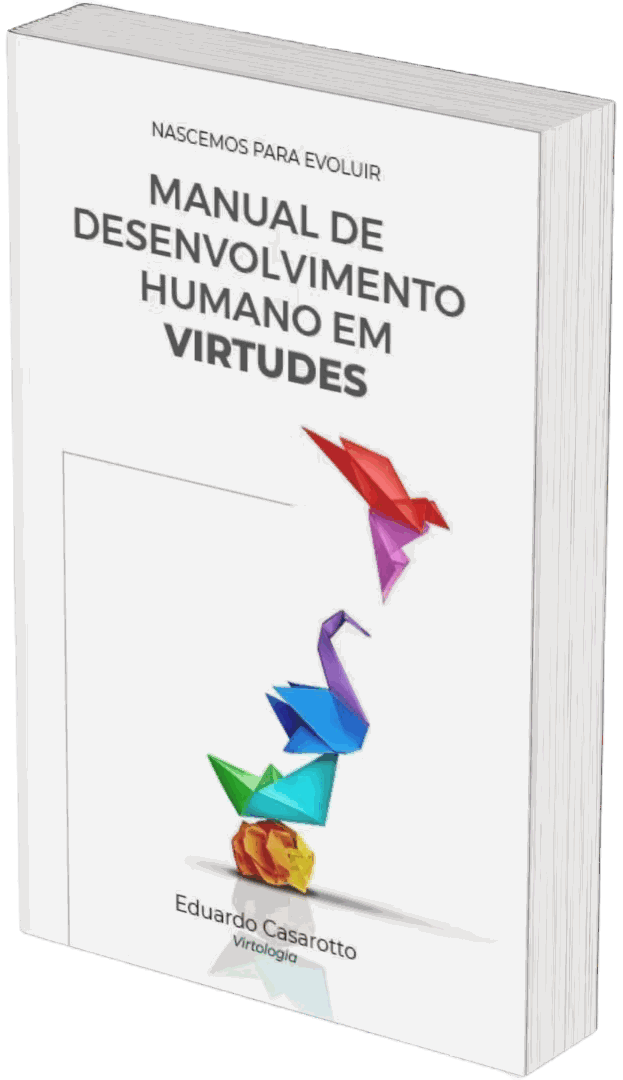
Portuguese cover of the Manual of Human Development through Virtues
FROM UNDERSTANDING TO PRACTICE

33 virtues.
Capacities for life.

The question is what becomes available in a real situation.

Virtology treats a virtue as a learned disposition that can guide a response, including under pressure. In the author’s account, the 33 virtues emerge from a comparative inquiry into religious traditions and become the basis of a structured practice program.

The Manual of Human Development through Virtues brings this into seven steps: read, write by hand, speak aloud, practice in life, reflect, repeat and stay present.

Explore all 33 virtues and the practice →

English translation in progress. Materials available on request. The Manual’s educational program complements appropriate professional care.

The mind behind it

Dr. Eduardo Casarotto

Dr. Eduardo Casarotto
Founder of Virtology · Instituto Virtudes

A body of thought. A life of practice.

Founder of Instituto Virtudes and creator of Virtology and Humanization 2.0, Casarotto connects human development with institutional life. The Institute reports more than 25 years of practice, over 20 books authored and more than 2,000 therapists trained. Its work includes prisons and educational settings, alongside dialogue with healthcare institutions.

Explore the author and his work →

◆
THE BLOG · BY ISABELLA BECKER

The ideas,
in everyday life.

Start with a question that stays with you.

Essays on pride, desire, comparison, relationships and the patterns we repeat. Read the illustrated English collection and explore the framework through familiar situations.

Explore the English blog →
◆
Prefer a guided path?

Start Here — the 12-step trail.

Twelve short reads, in order, so you meet Virtology the right way — not in scattered pieces. Built from the "Unveiling Neuroplasticity" course.

Begin at Step 1 →

Ready for more?

Two doors from here.

One is personal. One is the Institute. Both are the real thing.

Personal guidance

A Discovery call with me

Virtology is the first pillar of my method — the PRM (Personality Reconstruction Matrix). One-to-one work in English or Portuguese, for people who want to apply it to their own life — with someone who lives it.

Book your Discovery → Message me on WhatsApp → See the ways to work with me →
with Isabella Becker · alquimiadasvirtudes.com
Study at the source

Learn Virtology at the Institute

Go straight to the origin: the short course that started it all, and the full professional training with Dr. Eduardo Casarotto.

★ The full path · become a Virtologist

The Institute’s Professional Formation with Dr. Eduardo Casarotto is the complete training — the entire framework, the clinical method, and the certification to practice. The deepest way in, and the real route if you want to do this work with others.

Explore the Professional Formation →
New here? Start with the short course →
Instituto Virtudes
Isabella Becker

A translator who fell for the science. I'm Isabella Becker — I came to Virtology to translate it, and stayed to practice it. Alchemy of Virtues is where I bring it into English, one reader at a time. Virtology by Dr. Eduardo Casarotto · in partnership with Instituto Virtudes.

INTERNATIONAL & EDITORIAL ENQUIRIES

A conversation
across borders.

Isabella Becker

Human Development Advisor · Certified Virtologist · International Director of Instituto Virtudes

contato@alquimiadasvirtudes.com
WhatsApp +49 163 9643336