Du Bois
The color line, institutions and lived experience.
 Alchemy of VirtuesIN PARTNERSHIP WITH INSTITUTO VIRTUDES
STRUCTURAL AMERICANISM · A FRAMEWORK FOR CULTURAL ANALYSIS
A Virtological Analysis of Structural Americanism
English sample chapters available
Who taught us what a successful life should look like?
From the school reunion to the workday that never ends, Eduardo Casarotto examines how a culture of achievement turns recognition into a measure of human worth.
Conceptual editorial artwork
THE CENTRAL CONTRIBUTION
A culture travels furthest when its standards begin to feel like our own desires.
In God Bless America, Eduardo Casarotto proposes structural Americanism as a framework for examining how American-centered ideals of success become standards of worth, reinforced across borders by institutions, media and everyday habits of recognition.
He follows the process into familiar places: the classroom that rewards performance, the school reunion that becomes an audit of achievement, the screen that continually invites comparison. Through repetition and recognition, he argues, a cultural hierarchy can become part of how people judge themselves.
The book’s central distinction concerns identity. In Casarotto’s account, the pursuit of status is a wider human phase. Structural Americanism emerges when that phase becomes a cultural identity, reinforced at home and exported worldwide. Changing a practice then feels like giving up part of who we are.
The analysis addresses a cultural pattern and its reproduction. American traditions of dissent, solidarity and care are integral to the book’s account of how that pattern can be challenged.
FROM A PUBLIC STANDARD TO A PERSONAL DEMAND
Cultural stories establish which lives deserve admiration.
Schools, workplaces and media repeat and reward those standards.
Recognition becomes tied to the person we feel we must become.
The familiar standard can persist even when living by it becomes exhausting.
An editorial summary of the author’s argument, developed in the preface and opening chapters.
WHAT DISTINGUISHES THE BOOK
The distinctive move is to connect the global reach of a cultural model with the intimate need to matter.
Accounts of hegemony and cultural imperialism already examine how power shapes consent, habits and desire. Casarotto’s specific proposal brings that tradition into dialogue with Virtology, his framework for personality and human development. He follows how cultural standards become personal measures of worth, and how the search for recognition helps people reproduce them.
This gives the argument continuity across very different scales. School rituals, the suburban ideal, superhero narratives, hustle culture and algorithmic feeds become settings in which to examine the same relationship between belonging, status and power.
The book also asks what makes change difficult. If achievement supplies a person’s sense of worth, further achievement may renew the demand for recognition. Casarotto’s response connects the practice of virtues with environments that support different ways of relating and working.
How does a cultural model become common sense?
How does recognition turn that standard into a measure of self?
What changes when worth depends less on rank?
THE INTELLECTUAL CONTEXT
Some forms of power become harder to see as they become familiar.
Chapter I places structural Americanism in conversation with analyses of racism, patriarchy and cultural hegemony. Its question is how institutions and shared expectations reproduce a hierarchy beyond any one person’s intentions.
The color line, institutions and lived experience.
Gender roles and the social formation of women’s position.
Institutional racism beyond individual prejudice.
Representation and cultural domination.
A proposed synthesis of cultural power, status and personality formation.
Selected intellectual landmarks discussed in Chapter I, not the origins of these problems or a sequence of equivalent discoveries. Gramsci, Fanon, Schiller, Bourdieu and Wacquant also inform the chapter’s conversation with earlier work.
TWO FOUNDATIONS OF THE CONVERSATION
Gramsci’s Americanism and Fordism (Notebook 22, 1934) and Bourdieu and Wacquant’s On the Cunning of Imperialist Reason (1999; French original, 1998) help locate the book’s dialogue with earlier analyses of Americanism and the international circulation of cultural standards.
THE PSYCHOLOGICAL DIMENSION
Virtology supplies the book’s account of how cultural standards become personal demands.
Casarotto’s framework uses Pride in a technical sense: the need for importance, acceptance and approval. He asks how institutions and repeated experiences recruit that need, and how it becomes part of the way people evaluate themselves.
Virtology gives the book a vocabulary for examining needs, learned responses and capacities for change. The later chapters consider how humility, acceptance and responsibility might reshape habitual ways of relating to others.
The book develops an interpretive argument through cultural examples, dialogue with earlier thinkers and the author’s framework. Research findings and the proposed Virtological synthesis require distinct evaluation.
INSIDE THE BOOK
The argument moves from the formation of personality to the global circulation of power.
Across 34 chapters, the manuscript follows structural Americanism through familiar institutions and contemporary cultural forms. A glossary, twelve practical exercises and bibliographic material accompany the analysis.
Structural Americanism, pride, inferiority and the historical development of American power.
Family life, high school, the prom, school reunions, the suburban ideal and military reverence.
Soft power, entertainment, hustle culture, Silicon Valley and algorithmic reinforcement.
Popular mythology, political power, violence, incarceration and war.
American countercurrents, collective identity, the American Dream and comparisons with other cultures.
Virtology, institutional humanization, faith, solidarity and the possibility of changing inherited patterns.
Editorial reading map; the six groupings summarize the existing chapters.
Why can success feel compulsory even when it fails to bring a satisfying life? God Bless America approaches that question by examining the culture that teaches people what success should look like. Eduardo Casarotto argues that American-centered ideals of achievement have become influential standards through which individuals and societies measure their worth.
His organizing concept is structural Americanism. The term describes a system reproduced through institutions, stories, rituals and habits of recognition. It operates when a particular model of civilization becomes so familiar that its values seem natural or universal. The object of analysis is a cultural pattern; the book repeatedly recognizes the complexity of individual Americans and the country’s traditions of dissent.
The opening chapters establish the relationship between cultural power and Virtology, Casarotto’s framework for personality and human development. He places his proposal in conversation with structural accounts of race and gender, theories of hegemony and critiques of cultural imperialism. He then develops his account of Pride: the need to feel important, accepted and approved. The argument follows the ways that need can bind people to status and dominance, turning a stage of social development into an identity that feels necessary to defend.
The analysis becomes concrete in families, high schools, the prom and the school reunion. These settings show how belonging can depend on performance and how comparison can survive long after an institutional encounter ends. Suburban life extends the pattern into housing and consumption. The discussion of military reverence examines the relationship between public gratitude, collective identity and the questions a culture makes difficult to ask.
The middle chapters follow the production of aspiration. Superheroes, the figure of the entitled consumer and the promise of the American Dream become cultural case studies. Hustle culture places productivity at the center of identity. Silicon Valley and algorithmic feeds extend the analysis into systems that repeatedly invite people to compete for attention and recognition. The book then examines dominance through popular mythology, violence, incarceration, political leadership and war.
Later chapters complicate any single portrait of the United States. Casarotto discusses resistance to concentrated power, traditions of solidarity and the opposing uses of religious faith. He also applies his framework to other cultural contexts, including Brazil, Japan and Germany, to explore patterns that he understands as human rather than uniquely American.
The final movement asks what transformation would require. Virtology supplies a language of capacities that can be practiced, including humility, acceptance, responsibility and care for others. Casarotto examines the relationship between these capacities, habitual responses and the environments that reinforce them. A glossary and twelve exercises bring the argument into the reader’s own life. The book closes by returning its cultural question to the individual: what can we do with the standards we have inherited, and what will we pass on?
THE AUTHOR BEHIND THE ARGUMENT
Independent thought.
Experience in the field.
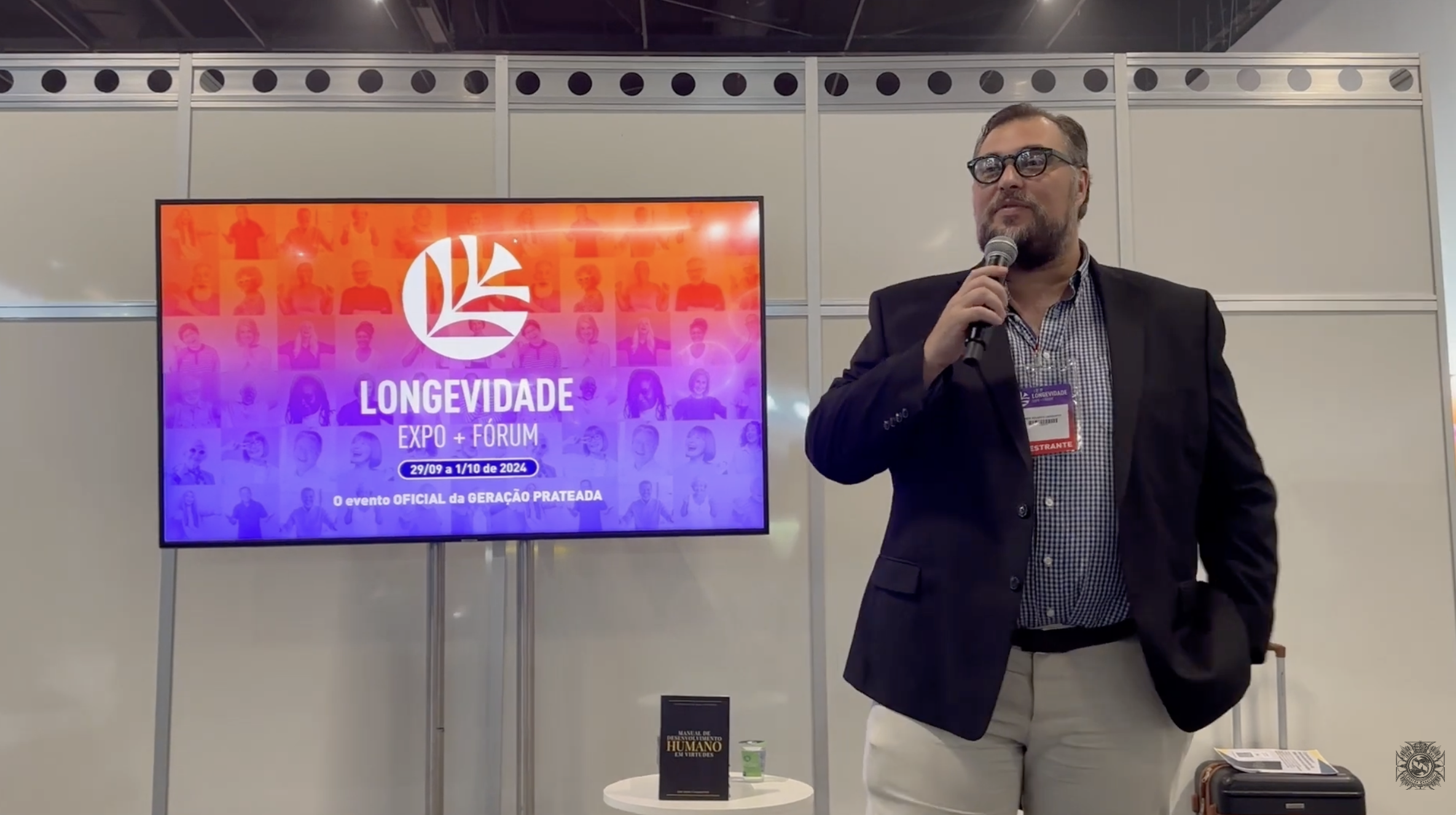
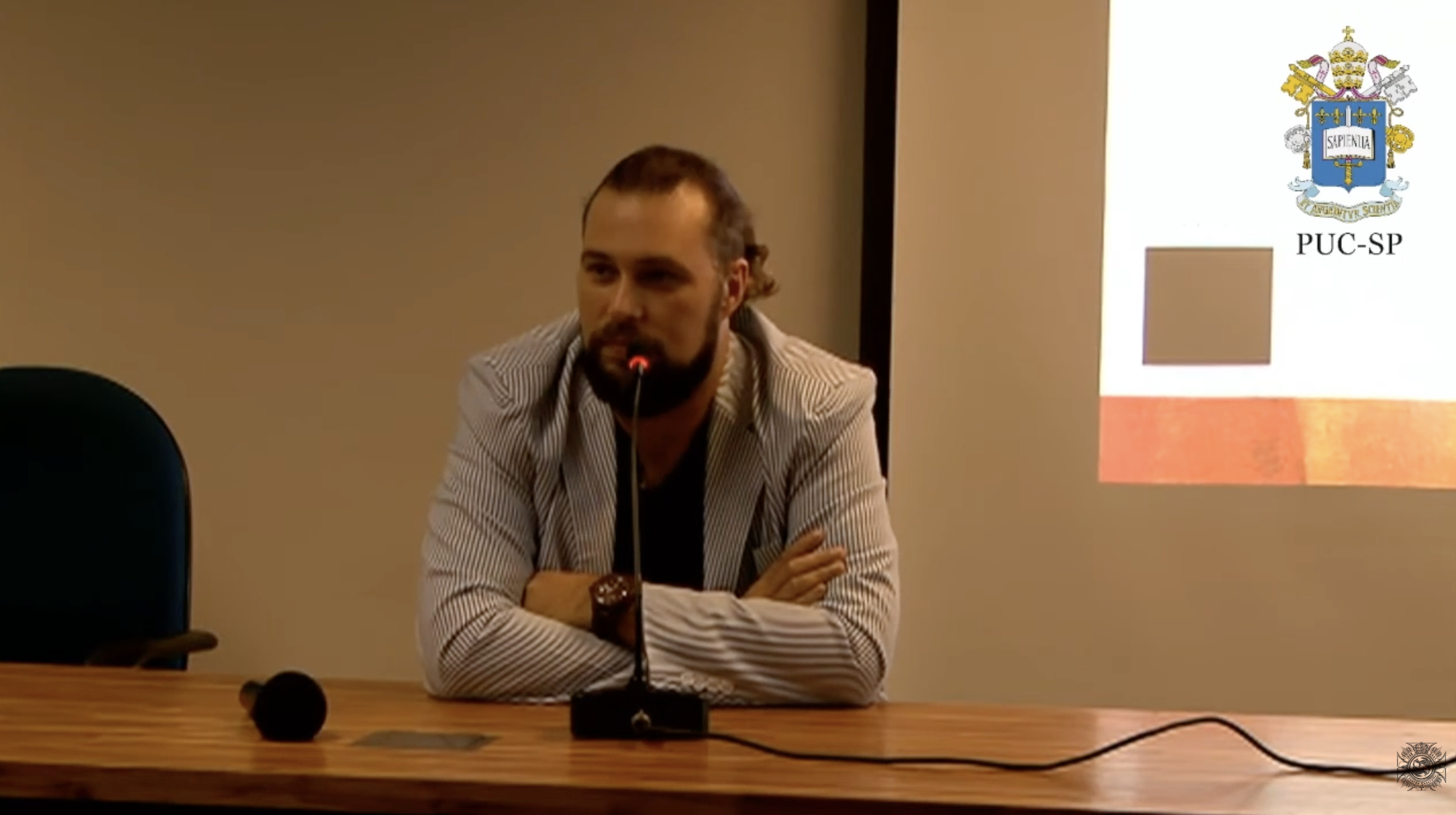
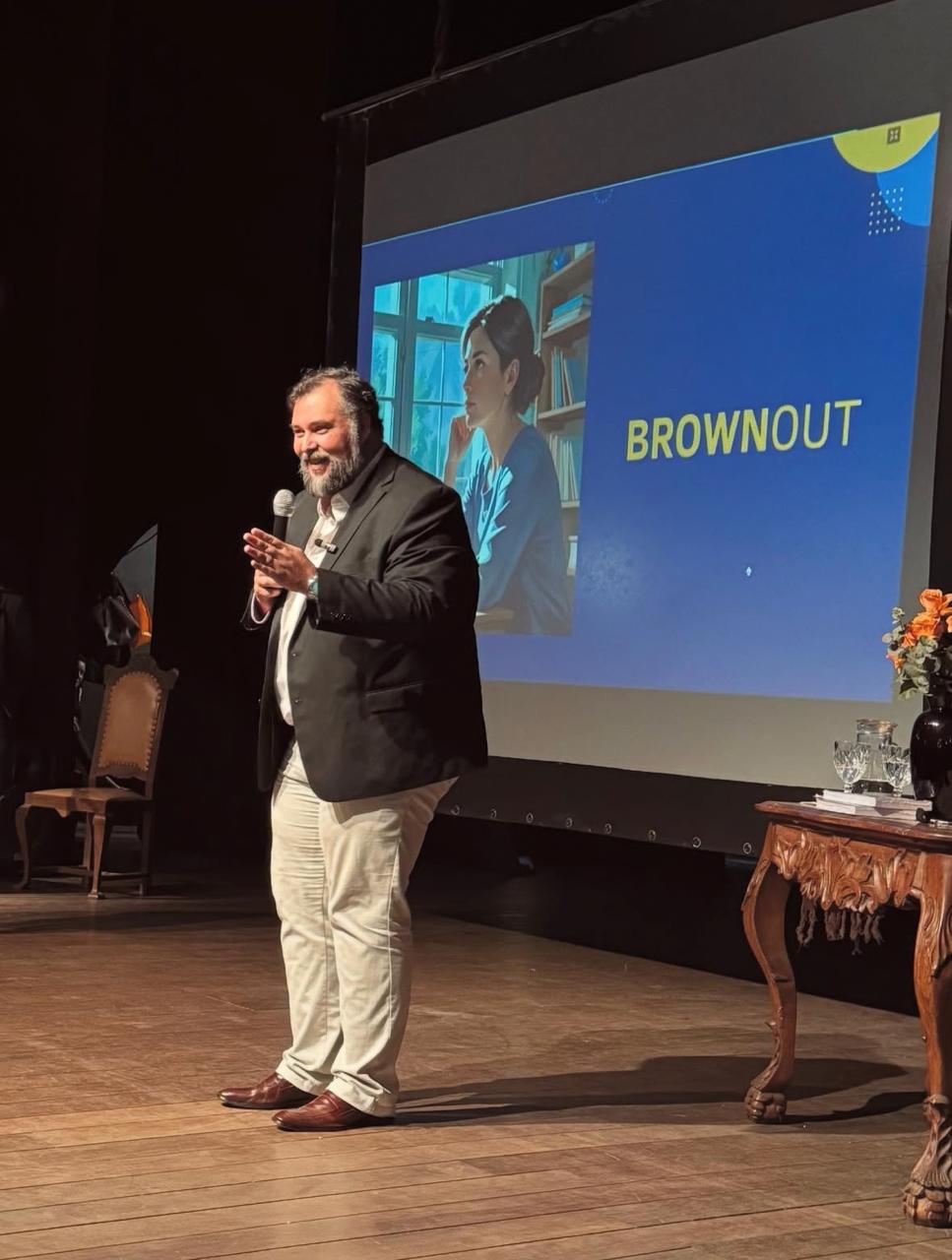
Eduardo Casarotto is an independent researcher, educator, author and postgraduate course coordinator with more than 25 years of work in human development, mental health and humanization.
He developed Virtology and Humanization 2.0, two connected frameworks that bring research and professional education into practical work with people and institutions. He founded Instituto Virtudes and Instituto Humanar.
ORCID 0009-0001-8274-1405 ↗
FROM HUMAN DEVELOPMENT TO INSTITUTIONAL LIFE
The settings behind a structural question: how does an environment shape the people within it?
The Institute’s programs and institutional dialogue connect Casarotto’s wider work with the themes of education, dignity and organizational life that inform his writing.
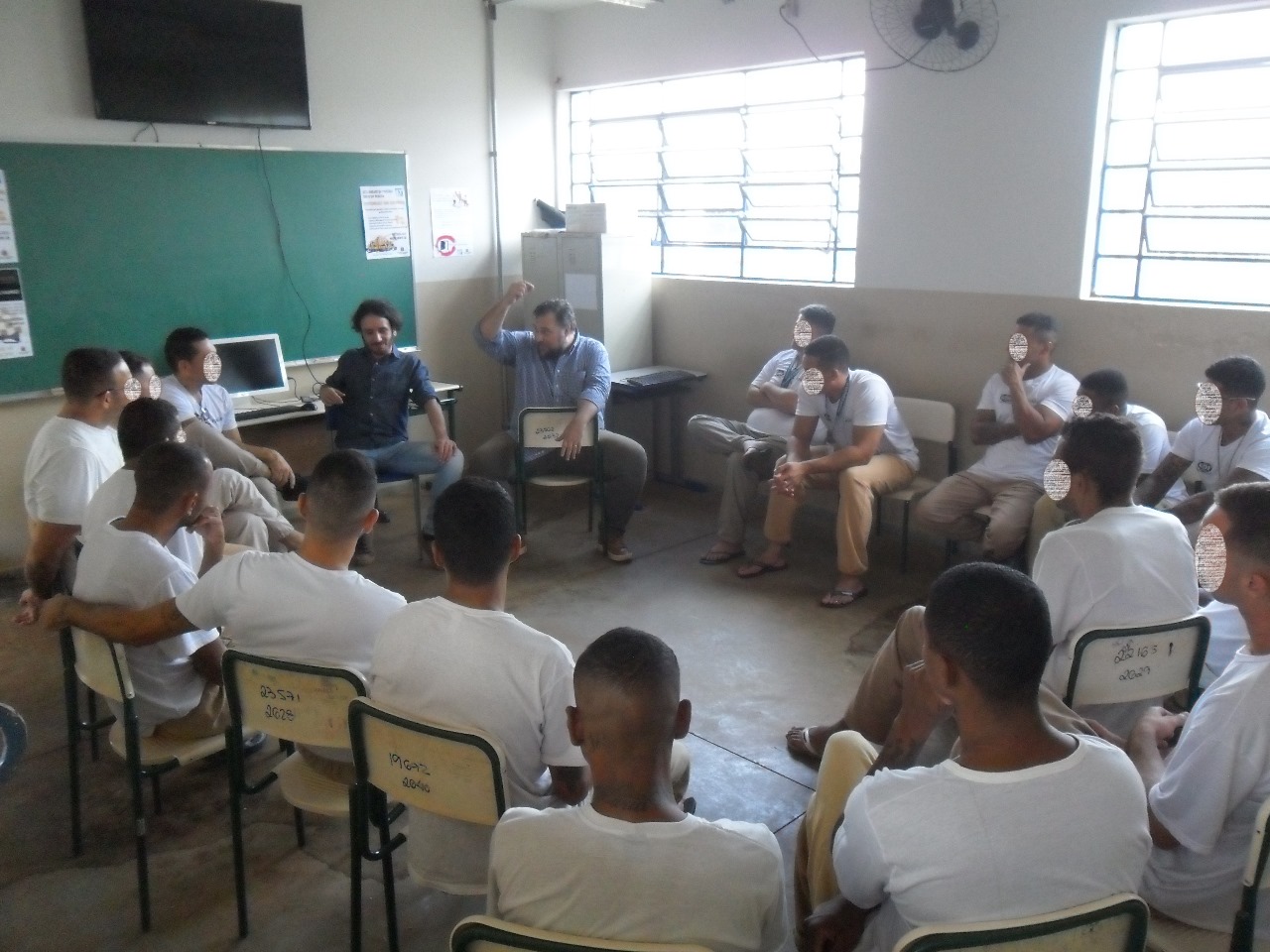
PRISONS & THERAPEUTIC COMMUNITIES
Group virtue exercises designed for institutions to conduct themselves. The Institute also develops prison humanization through routines, rules and staff training.
HOSPITALS & HEALTHCARE
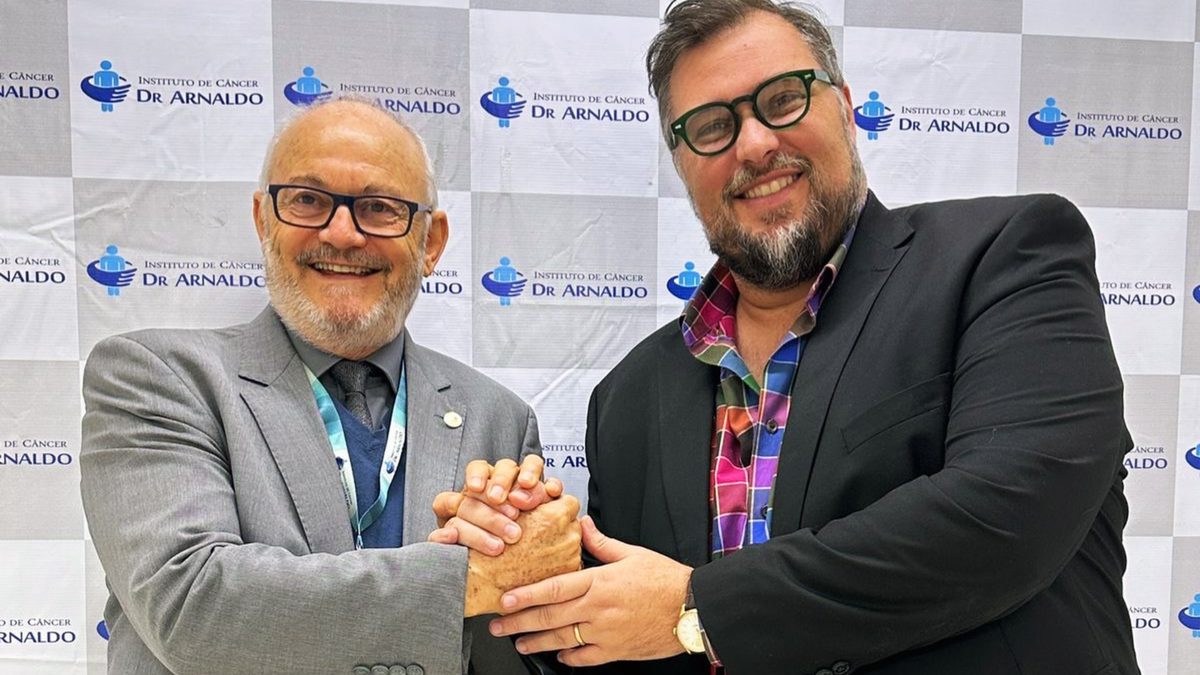
At São Paulo’s Instituto de Câncer Dr. Arnaldo, the Institute presented a complementary-care proposal involving Virtology and Humanization 2.0.
Photograph of the institutional visit.Programs, institutional accounts and documentary photographs: Instituto Virtudes.

THE AUTHOR’S INSTITUTIONAL CONTEXT
The Institute brings together education, data analysis and research grounded in Virtology and Humanization 2.0. Its work includes schools, people in custody and people leaving prison, alongside initiatives involving mental health and the prevention of violence against women.
This experience provides context for the book’s interest in human dignity and the environments that shape everyday life.
Meet Instituto Virtudes ↗THE EDITORIAL OPPORTUNITY
For readers who recognize the pressure to achieve, perform and prove their worth, and want to understand the culture behind it.
God Bless America offers publishers a sustained argument that connects cultural criticism with the psychology of everyday life. Its recognizable settings give readers a way into the larger question: how do standards of success become standards of the self?
A Brazilian perspective brings an additional vantage point to the circulation of American ideals. Readers in the United States can examine familiar institutions through that lens. Readers elsewhere can investigate the models of ambition and belonging they have inherited.
The core audience spans cultural criticism, social philosophy and the psychology of power, with further relevance for educators and people working with human development and institutional change.
FOR PUBLISHERS & LITERARY AGENTS
The final Portuguese manuscript, with an English proposal and two translated sample chapters for editorial consideration.
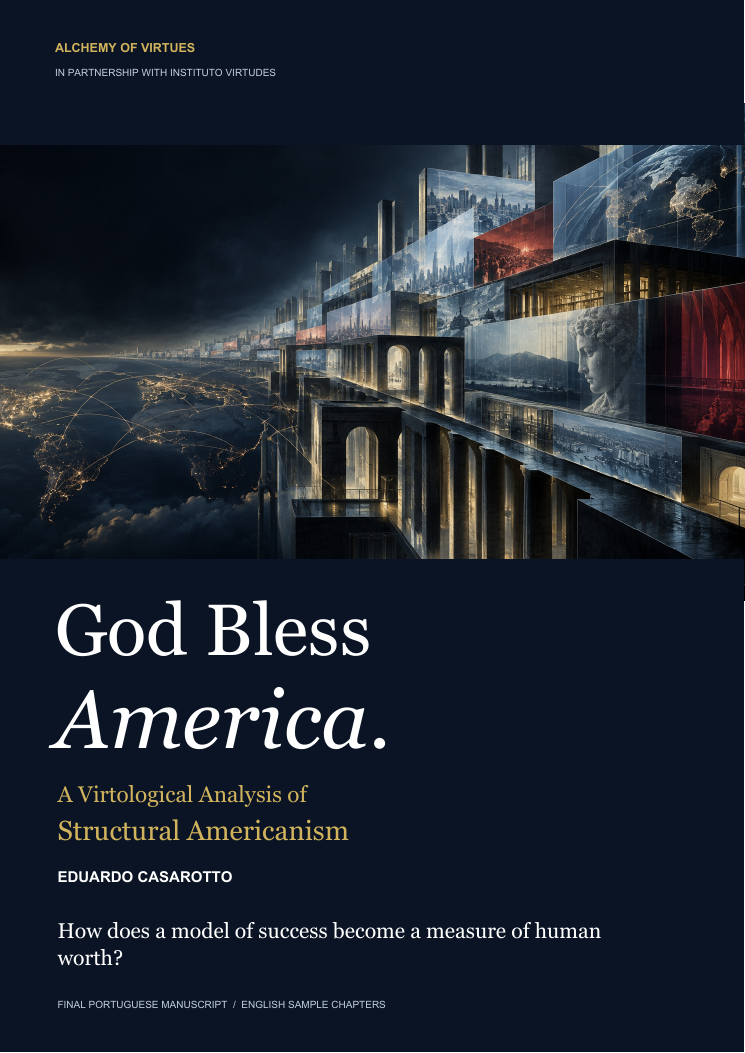 THE EDITORIAL PRESENTATIONThe book.
INTERNATIONAL EDITORIAL CONTACTS
International Director, EMEA
Instituto Virtudes
Europe, Middle East & Africa
Human Development Advisor · Certified Virtologist
contato@alquimiadasvirtudes.comInternational Director, AMER
Instituto Virtudes
The Americas
anakarolina_f@hotmail.comThis presentation contains an overview of the work. Sample chapters and the complete Portuguese manuscript can be discussed privately with the regional editorial contacts.