What actually happened?
The practice is anchored in a concrete encounter or decision, so reflection has an experience to work with.
 Alchemy of VirtuesIN PARTNERSHIP WITH INSTITUTO VIRTUDES← God Bless America
33 VIRTUES · REFLECTION · DAILY PRACTICE
33 virtues. Seven practice steps. A daily form for human development.
A virtue to study. A situation in which to practice it. A record of what happened. The Manual gives Casarotto’s wider theoretical project a daily form.
English translation in progress. Translation materials available on request.
01 / THE PRACTICAL PROPOSITION
The Manual connects explanation, reflection and action.
The revised second edition introduces the theoretical background before moving through the virtues. Each virtue is approached as a capacity to develop in daily life.
In the book’s working vocabulary, knowing about a virtue is one part of the process. Its exercises ask the reader to connect that knowledge with what they actually do when an opportunity or a difficulty appears.
The chapters include discussion of how the author relates each virtue to his account of learning and the brain. The manuscript distinguishes working metaphors, established findings and specifically Virtological interpretations.
02 / ORIGINS OF THE 33
Across traditions, a shared question: what helps a human being develop?
Casarotto describes a comparative inquiry into religious traditions, seeking the practices and dispositions they hold in common. He identifies 33 virtues as the shared vocabulary at the heart of his approach.
Virtology then asks how these dispositions can become available in ordinary life: in a disagreement, under criticism, in a position of authority or when another person needs help.
The conceptual move is from a teaching someone can repeat to a capacity they can exercise. In this framework, a virtue is a learned disposition that can guide a response under pressure; it is not a label for judging someone’s moral worth.
The approximate figure is reported in the author’s Fundamentos manuscript. The Institute’s public account describes comparative work across dozens of named traditions. The complete research corpus and the extent of agreement remain matters for scholarly examination.
03 / THE 33 VIRTUES
The sequence follows the revised second-edition manuscript.
04 / THE SEVEN STEPS
The revised Manual organizes practice around one virtue at a time, in fourteen-day cycles.
Study the text of the selected virtue with attention.
Use a dedicated notebook to write the virtue’s affirmation.
Return to the affirmation aloud at separate moments.
Choose a concrete situation in which to exercise the virtue.
Record what happened, what was difficult and what became possible.
Return to the sequence across the practice cycle.
Bring conscious attention to the steps of the process.
This is an overview of the book’s educational practice sequence. A fourteen-day cycle is the author’s proposed format, rather than a guarantee of a particular outcome.
05 / REFLECTION AND PROGRESS
The practice is anchored in a concrete encounter or decision, so reflection has an experience to work with.
The reader records what they were able to practice and where the habitual response remained difficult to change.
The record supports continued work with the selected virtue and attention to the situations in which it is needed.
The manuscript treats self-ratings and observational markers as tools for orientation. They are not diagnostic instruments and do not replace professional assessment.
06 / WHO IT IS FOR
The Manual offers a structured educational program for readers who want to study and practice the virtues in everyday relationships and responsibilities.
Educators and appropriately qualified professionals can examine its approach and consider its use within their own role, training and responsibilities.
RETURN TO THE CENTRAL BOOK
God Bless America examines learned patterns of cultural power. The Manual develops the practice dimension of the author’s proposed response: the cultivation of dispositions through which people can question and change inherited patterns.
Explore structural Americanism →FURTHER READING & AVAILABILITY
This is an English presentation of the book. The English translation is in progress, and translation materials are available on request.
The revised Manual follows its Pyramid of Virtues, moving through foundational work, development and transcendence. The sequence shown here follows that revised manuscript rather than the older order on the Portuguese sales page.
The revised practice sequence proposes one virtue at a time, returning to the program as an ongoing process.
No. The manuscript describes them as aids to reflection and direction of practice. Diagnosis requires appropriate professional assessment.
Foundations of Virtology develops the theory. The Manual organizes practice. Humanized Systems applies the institutional perspective. God Bless America brings the structural inquiry to cultural power.
No. The revised Manual describes its work as educational and complementary to diagnosis, psychotherapy, psychiatric care, medication and medical treatment when needed.
Contact Isabella Becker, International Director of Instituto Virtudes, at contato@alquimiadasvirtudes.com or WhatsApp +49 163 9643336, to discuss English editions and evaluation materials. Full manuscripts are shared privately by arrangement.
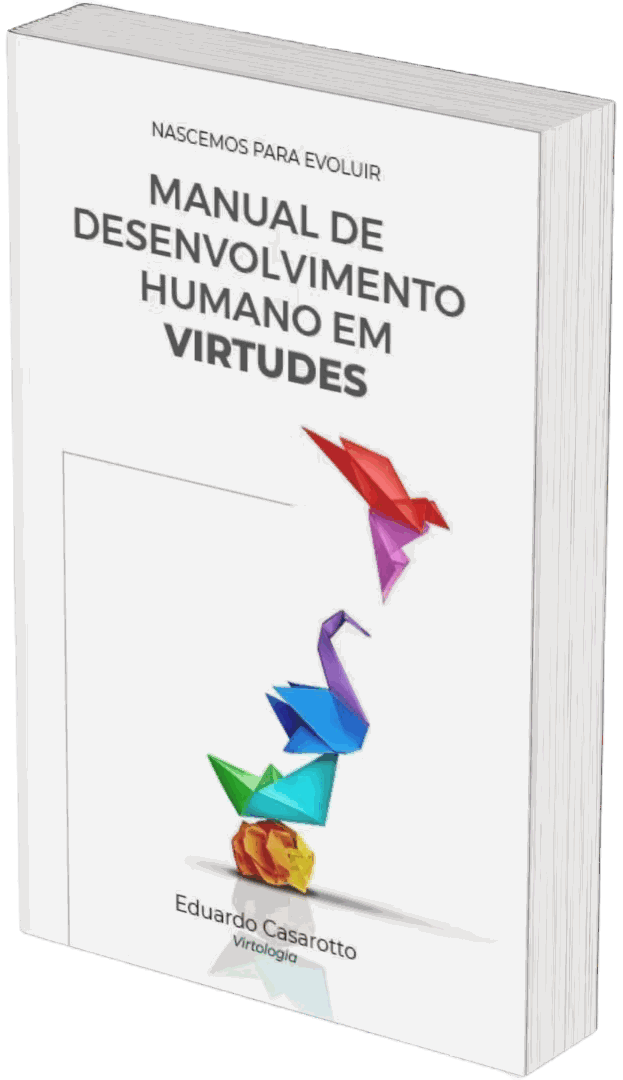
English editorial presentation based on the revised second-edition Manual supplied for this project, with its seven-step practice sequence. Official Portuguese cover shown; English title used here is descriptive.
Original institute catalogue (Portuguese; may describe an earlier edition) ↗